Emma Hernan may be best known for her appearances on Netflix’s Selling Sunset, but her food business has roots that go back much further than her television career.
Hernan comes from a Massachusetts family with generations of seafood manufacturing experience. Her grandfather founded Yankee Trader Seafood, and she later developed her own frozen-food business, Emma Leigh & Co.
That earlier company gained attention for its unusual plant-based empanadas. Rather than focusing on traditional fillings, Hernan experimented with flavors inspired by cheeseburgers, meatless beef, and breakfast sandwiches, using ingredients such as Beyond Meat and JUST Egg.
The business attracted plenty of attention through Selling Sunset, where Hernan regularly discussed her entrepreneurial ventures. A 2021 Northshore Magazine feature documented the company’s plant-based products and her family’s food manufacturing background. Coast to Coast Kitchen marks a return to seafood, combining her family’s industry experience with the empanadas that became part of her public identity.
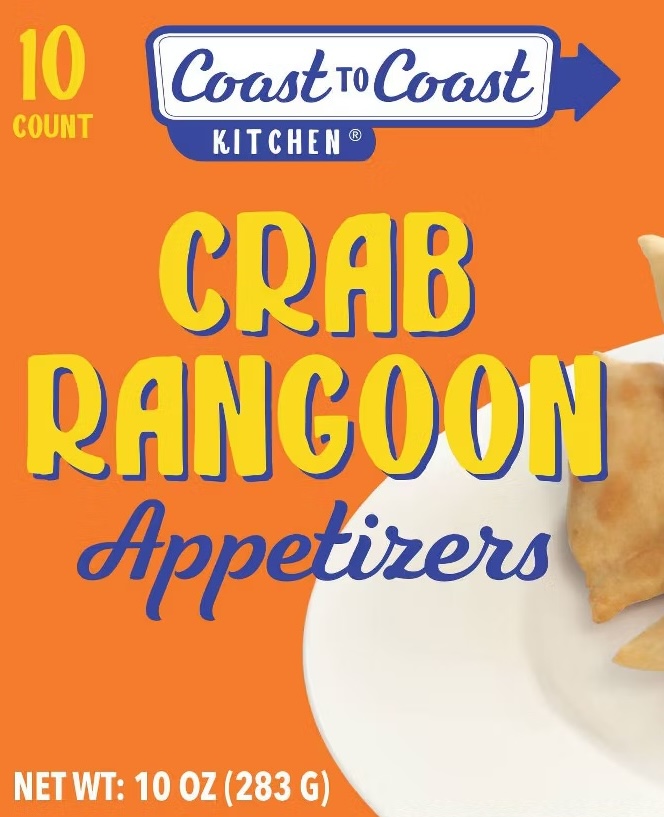
The brand entered Target stores in February 2026. Its September expansion introduced Lobster Empanadas, Sweet Chili Shrimp Empanadas, and Crab Rangoon, alongside existing products such as Crab Cakes and Scallops Wrapped in Bacon. According to the company’s September 2026 announcement, Coast to Coast Kitchen had already generated millions of dollars in Target sales.
Coast to Coast Kitchen Claims to Be “High in Protein.” Do the Products Deliver?
One of the most interesting findings in our review has nothing to do with food additives. On its official website, Coast to Coast Kitchen promotes its products using three short selling points: “High In Protein,” “Non GMO,” and “Really Tasty.”
The high-protein claim is particularly worth investigating because seafood is naturally associated with lean, protein-rich nutrition. Yet the actual protein figures vary substantially.
| Product | Calories | Protein | Sodium | Saturated fat |
|---|---|---|---|---|
| Crab Cakes (1 cake, 71 g) | 170 | 4 g | 400 mg | 1.5 g |
| Crab Rangoon (2 pieces, 57 g) | 150 | 6 g | 280 mg | 2.5 g |
| Lobster Empanadas (3 pieces, 85 g) | 180 | 8 g | 500 mg | 3 g |
| Scallops Wrapped in Bacon (2 pieces, 45 g) | 100 | 6 g | 230 mg | 2.5 g |
| Sweet Chili Shrimp Empanadas (3 pieces, 85 g) | 170 | 10 g | 420 mg | 1 g |
Under the FDA’s nutrient content labeling rules, a regulated “high in protein” claim generally requires at least 20% of the protein Daily Value per reference amount customarily consumed. With the adult Daily Value set at 50 grams, that corresponds to 10 grams of quality-adjusted protein.
The Crab Cakes provide only 4 grams per labeled serving, equivalent to 8% of the unadjusted Daily Value. Crab Rangoon contains 6 grams, while Lobster Empanadas provide 8 grams. Only the Sweet Chili Shrimp Empanadas reach 10 grams per labeled serving, and even that figure doesn’t automatically establish eligibility for a regulated high-protein claim because protein quality and the applicable reference serving must also be considered.
The website’s statement is a general brand-level marketing message rather than a verified nutrient-content claim printed on each reviewed package. Still, the figures reveal a substantial gap between the high-protein impression and the nutritional reality of several products.
The Crab Cakes are the clearest example. Eating all four cakes would provide 680 calories but only 16 grams of protein. That’s a considerable amount of food and energy for a fairly modest protein return. For context, two cakes contain 340 calories, 20 grams of fat, and just 8 grams of protein. Most of the calories aren’t coming from protein-rich seafood.
Some actual high-protein foods are, for instance, Chobani Plain Nonfat Greek Yogurt with 16 grams of protein per serving (and one serving is just 90 calories) or a simple boiled egg which packs 6 grams of protein per egg and around 70-80 calories.
Coast to Coast Kitchen Crab Cakes: Surprisingly Little Protein for a Seafood Product
The Crab Cakes are arguably the biggest nutritional disappointment in the selection. Despite crab being the first ingredient, each 71-gram cake contains only 4 grams of protein alongside 10 grams of fat and 15 grams of carbohydrates.
A closer look at the recipe helps explain why. The crab is combined with surimi, mayonnaise, breadcrumbs, eggs, vegetables, and seasonings. Surimi is a processed seafood ingredient, commonly made from Alaska pollock. It contains fish protein, but Coast to Coast Kitchen’s version also includes starches, soybean oil, sugar, flavorings, and added colors. Mayonnaise contributes much of the fat.
Crab is genuinely present, although the manufacturer doesn’t disclose how much of the finished cake consists of actual crab meat. Considering that protein-rich crab is the featured ingredient, we’d expect a stronger nutritional return.
The product also contains calcium disodium EDTA through its mayonnaise. This additive helps prevent oxidation by binding metal ions. Its mineral-binding properties are also relevant to toxicological assessments, particularly at high exposure levels. EDTA is permitted within specified food-use limits, but it’s another ingredient added for manufacturing and preservation rather than nutritional benefit.
There are some positives, though. Saturated fat is relatively modest at 1.5 grams per cake, and the product contains only 1 gram of added sugar. Those advantages are overshadowed by the poor protein efficiency and 400 milligrams of sodium per cake.
Coast to Coast Kitchen Crab Rangoon: More About Cream Cheese Than Crab
Crab Rangoon is traditionally a rich, creamy appetizer, and Coast to Coast Kitchen follows that familiar recipe. Two pieces contain 150 calories, 6 grams of protein, 21 grams of carbohydrates, and 2.5 grams of saturated fat.
The filling lists cream cheese before crab meat and surimi. That tells us cream cheese is the largest individually declared ingredient in the filling, although the exact proportions aren’t provided.
Nutritionally, the combination behaves more like a cheese-filled pastry than a substantial serving of seafood. The cream cheese also contains stabilizers, including guar gum and carob bean gum. These help maintain texture, while the refined wheat wrapper contributes most of the carbohydrates.
One serving has 280 milligrams of sodium, which appears modest compared with the Lobster Empanadas. The difference partly reflects the smaller serving size: on a weight-adjusted basis, Crab Rangoon contains approximately 491 milligrams of sodium per 100 grams.
Portions are another consideration. Five pieces, or half the package, provide approximately 375 calories and 700 milligrams of sodium. The product contains some genuine seafood protein, but the more prominent nutritional contributions come from pastry, cream cheese, and fat.
In our eyes, Crab Rangoon should be treated as an indulgent appetizer, not a nutritious seafood snack.
Coast to Coast Kitchen Lobster Empanadas: Premium Seafood, but a High-Sodium Recipe
Lobster sounds like the kind of ingredient that could set Coast to Coast Kitchen apart from conventional frozen snacks.
The ingredient list tells a more interesting story, though. Within the filling, cream cheese appears first, followed by lobster meat and surimi. Real lobster is part of the recipe, but cream cheese is the largest individually marked filling ingredient.
Three empanadas provide 180 calories and 8 grams of protein, alongside 24 grams of carbohydrates and 3 grams of saturated fat. Compared with the Crab Cakes, the protein content is an improvement. The cream cheese and wheat-based wrapper still account for a meaningful portion of the product’s nutritional profile.
The biggest drawback is sodium. A three-piece serving contains 500 milligrams, approximately 22% of the FDA’s Daily Value. That’s the highest sodium concentration in our comparison, at approximately 588 milligrams per 100 grams. If you ate the full eight-piece package, you’d consume roughly 1,330 milligrams of sodium based on the rounded label values (and we all know how easy it is to overeat on tiny highly palatable appetizers).
The American Heart Association recommends no more than 2,300 milligrams daily, with an optimal target of 1,500 milligrams for most adults. The full package therefore provides almost 90% of that optimal target.
Unfortunately, Lobster Empanadas fall flat when it comes to their protein content, but sodium content in itself is too excessive for such a small portion. Feel free to snack on these, but don’t expect any huge health benefits.
Coast to Coast Kitchen Scallops Wrapped in Bacon: Better Protein, Questionable Bacon
Of the five products, the Scallops Wrapped in Bacon have the simplest overall recipe.
Two pieces contain 100 calories, 6 grams of protein, and just 1 gram of carbohydrates. They also provide the highest protein-to-calorie ratio in our comparison, delivering 6 grams of protein per 100 calories.
The nutritional problem isn’t the scallops, though. It’s the bacon. Scallops are naturally lean, but wrapping them in bacon changes the finished product considerably. Each small serving contains 8 grams of fat, including 2.5 grams of saturated fat. The bacon is also cured using sodium nitrite, sodium phosphate, and sodium erythorbate.
The health concerns surrounding processed meat are well established. The World Health Organization classifies processed meat consumption as carcinogenic to humans, based on evidence linking it to colorectal cancer. An analysis of ten studies estimated that consuming 50 grams of processed meat daily was associated with approximately an 18% increase in relative colorectal cancer risk.
The scallops have genuine nutritional advantages: relatively high protein efficiency, minimal carbohydrates, and a short ingredient list. Their processed-meat content remains a substantial drawback. In terms of protein content, these scalloprs are far better choices among the product line, but don’t consider these equivalent to eating plain scallops.
Coast to Coast Kitchen Sweet Chili Shrimp Empanadas: The Best Nutritional Profile, but What About the Additives?
If we compare calories, protein, and saturated fat, the Sweet Chili Shrimp Empanadas are the clear winner. Three pieces contain 170 calories, 10 grams of protein, and just 1 gram of saturated fat. Shrimp is the leading filling ingredient, followed by mozzarella cheese, providing a better protein balance than the cream-cheese-heavy products.
The sugar content is also surprisingly low for something described as sweet chili. Each serving declares 1 gram of total sugar and zero grams of added sugar, although sugar appears within the sauce ingredients.
Our main concern is the ingredient formulation. The empanadas contain xanthan gum in their sweet chili sauce, citric acid in prepared ingredients, and natamycin in the mozzarella. Powdered cellulose is also included in the cheese as an anti-caking ingredient.
Xanthan Gum and Gut Health
Xanthan gum is widely used as a thickener and stabilizer in processed foods, produced through bacterial fermentation.
An April 2026 study published in PLOS One investigated prolonged xanthan gum consumption in 32 rats over ten weeks. Researchers tested three concentrations, ranging from 462.5 to 1,850 milligrams of xanthan gum per kilogram of feed. They observed inflammatory changes in the colon, including increased immune-cell infiltration and altered inflammatory markers. The study also reported changes in gut microbiota and proteins involved in the intestinal barrier.
These are meaningful findings because they suggest xanthan gum can influence intestinal physiology during sustained exposure. The study thus gives us one quite viable reason to avoid xanthan gum exposure. Though the concentration in Coast to Coast Kitchen’s empanadas is unknown, we don’t condone using gums and stabilizers in food products, no matter the reason for using them.
Manufactured Citric Acid and Inflammatory Reactions
Citric acid is another ingredient we believe deserves more attention in processed-food discussions. Citric acid occurs naturally in citrus fruits, but commercially manufactured citric acid is commonly produced through fermentation involving Aspergillus niger.
A 2018 paper published in Toxicology Reports documented four individuals who experienced recurring inflammatory-type symptoms after consuming products containing manufactured citric acid.
Their reported symptoms included gastrointestinal discomfort, joint pain, respiratory complaints, and fatigue. The researchers proposed that possible manufacturing-related impurities or individual sensitivities could contribute to these reactions.
The case reports weren’t controlled experiments and couldn’t establish causation. They also didn’t demonstrate that fungal proteins or other suspected contaminants were present in the consumed citric acid. Even so, the findings raise a question that warrants proper clinical research, particularly given how widely manufactured citric acid is used in everyday foods.
The specific origin and quantity of citric acid in the shrimp empanadas aren’t disclosed.
Nutritional Problems Across the Coast to Coast Kitchen Range
Emma Hernan’s reputation and shining presence already give plenty of reason to trust Coast to Coast Kitchen products, but after we dove deeper into the ingredient list, we found a few specific concerns that stood out to us.
Naturally, most of us tend to trust seafood products since we all know how good seafood can be for our health. The thing is that when it comes to highly processed seafood products, things are a bit different. In addition to several additives, the fairly low protein content is something to consider.
Though Coast to Coast Kitchen’s selling points refer to high protein count, the actual nutrition label tells a different story. The Crab Cakes are the clearest example, but even the other products provide relatively modest amounts of protein compared with substantial servings of plain seafood.
We aren’t quite satisfied with Coast to Coast Kitchen’s sodium content either, since it’s relatively high for the product’s weight. Every reviewed product contains approximately 490–590 milligrams per 100 grams.
On top of everything else, Coast to Coast Kitchen doesn’t quite offer any fiber, relies heavily on cream cheese and refined flour, and still contains some food additives that we’d rather avoid.
None of this changes the fact that seafood can provide valuable nutrients. It simply demonstrates why the nutritional quality of a finished convenience product needs to be evaluated separately from the reputation of its main ingredient (or of its manufacturer).
Are Emma Hernan’s Coast to Coast Kitchen Products Healthy?
Coast to Coast Kitchen products are better described as convenient, seafood-inspired appetizers than genuinely health-focused foods.
The Sweet Chili Shrimp Empanadas have the strongest overall nutrition figures, followed by the bacon-wrapped scallops for protein efficiency. The Crab Cakes perform poorly for protein, the Lobster Empanadas stand out for sodium, and Crab Rangoon is primarily a cheese-and-pastry appetizer.
If you’re choosing between these products and plain seafood, the latter is an obvious choice for nutritional perks.
At the same time though, eating these as occasional appetizers isn’t an issue and we are quite pleased with Emma Hernan here, as most of the ingredients are actually rather good. The more important consideration is whether you’re choosing these products for convenience and flavor or because you believe they’re particularly nutritious. From nutritional and health perspective, we’d recommend avoiding products with food additives (like xantham gum) and opt only for products without any unnecessary additives. Luckily, Coast to Coast Kitchen product line does contain such options as well.
Emma Hernan has built a substantial food business, and Coast to Coast Kitchen’s expansion into Target is an interesting continuation of her entrepreneurial career. We’re mostly left unimpressed by the brand’s “high protein” claims which are difficult to reconcile with a Crab Cake that contains only 4 grams of protein.
Coast to Coast Kitchen sells convenience and familiar comfort-food flavors, not exceptional nutrition. There’s nothing wrong with choosing an appetizer because it tastes good, but its seafood branding and high-protein messaging shouldn’t replace a careful look at the nutrition label.
Editorial methodology
This analysis uses the nutrition and ingredient labels supplied for five Coast to Coast Kitchen products, the brand’s publicly available marketing, FDA nutrition-labeling guidance, and published scientific research. All calculated comparisons use rounded manufacturer values. We did not independently test the products or measure their seafood and additive concentrations.