Creatine is usually sold as a muscle-building supplement, so seeing it mentioned in weight-loss discussions can feel contradictory. It can make the scale rise, pull more water into muscle, and support gains in lean mass. None of that sounds like a standard fat-loss supplement.
So, does creatine help you lose weight? Not directly. Creatine does not burn a meaningful number of calories, suppress appetite, block fat absorption, or create the calorie deficit required for weight loss. Though some influencers in social media might label creatine as a fat burner, that’s not really the case.
However, creatine may still be useful during a fat-loss phase. When paired with resistance training, it can support strength, training performance, and lean mass. Those benefits can improve body composition even when total scale weight does not fall faster. Research also suggests that people taking creatine while resistance training may lose a small amount more body fat than people doing the same training without it, although the effect is modest and not consistent in every group.
Quick Answer: Is Creatine Good for Weight Loss?
Creatine can be a useful supplement during weight loss, but it is not a weight-loss supplement in the usual sense.
It may help you:
- Maintain better training performance while eating fewer calories.
- Gain or preserve lean mass when paired with resistance training.
- Become stronger, which may let you complete more productive workouts.
- Improve body composition over time, even when the scale changes slowly.
It will not replace a calorie deficit, a protein-rich diet, sleep, daily movement, or resistance training. When those basics are missing, creatine is not going to rescue the plan.
This distinction matters because “weight loss” and “fat loss” are not the same thing. Losing five pounds from water and muscle may create a lower number on the scale, but it is not necessarily a better result. Losing fat while holding on to muscle is the more useful target for health, appearance, physical function, and long-term weight control.
What Does Creatine Actually Do?
Creatine is a compound your body makes from amino acids. Most of it is stored in skeletal muscle as free creatine and phosphocreatine. During brief, intense activity, phosphocreatine helps replenish adenosine triphosphate, or ATP, which is the immediate energy source used by working muscle.
That is why creatine is most useful for repeated, high-effort work such as weight training, sprinting, jumping, and other short bursts of intense exercise. The National Institutes of Health notes that creatine can improve performance in activities involving intense effort followed by short recovery periods.
Creatine does not stimulate the nervous system like caffeine. It is not a steroid, hormone, appetite suppressant, or thermogenic ingredient. Its main job is much less glamorous: it helps muscle regenerate energy during hard efforts.
That simple action can matter during a diet. Calorie restriction can make training feel harder, especially as the diet continues. When creatine helps you maintain a little more strength, complete another repetition, or preserve training volume, it may help protect the muscle tissue you are trying not to lose.
Does Creatine Help With Weight Loss by Burning Fat?
No convincing evidence shows that creatine directly causes fat cells to release or burn substantially more fat. It does not create the energy deficit that drives weight loss.
The research is more nuanced than a flat “no,” though. A 2024 systematic review and meta-analysis looked at adults younger than 50 who combined creatine with resistance training. Compared with resistance training alone, creatine was linked with about 1.14 kilograms more lean body mass, a 0.88-percentage-point greater drop in body-fat percentage, and about 0.73 kilograms more fat loss.
Those figures sound impressive until they are placed in context. The fat-loss difference was small, the studies varied, and creatine was used alongside resistance training—not as a stand-alone fat-loss treatment. The finding does not prove that creatine itself “burned” the fat. Better training, greater lean-mass gains, changes in body-water distribution, or limits in body-composition testing may explain part of the result.
Research in adults under 50 has also found a small reduction in body-fat percentage without a significant reduction in absolute fat mass. In other words, body-fat percentage may improve partly because lean mass rises, not because a large amount of extra fat disappears.
Why Can Creatine Make Your Weight Go Up?
Creatine can increase body weight, especially during the first several days of use. This is usually caused by water being drawn into muscle cells as muscle creatine stores rise. It is not the same as gaining body fat.
The early change is often more noticeable when someone uses a loading phase, such as 20 grams per day for five to seven days. A smaller daily dose fills muscle stores more gradually and may produce a less abrupt scale change.
Research reviews describe early water retention as the most common short-term effect, while longer studies do not consistently show a disproportionate rise in total body water relative to muscle mass.
This is where creatine can mess with your head during a diet. You may be losing fat while the scale stays flat—or even rises—because muscle water has increased. That does not mean the calorie deficit stopped working.
If you want to opt for creatine supplements, it’s incredibly crucial to keep in mind that your scale weight could go up, but that doesn’t mean anything in terms of your fat loss.
Is Creatine Good for Weight Loss in Women?
The basic answer is the same for women and men: creatine does not directly cause fat loss, but it may support resistance-training performance and lean mass.
Women are often warned away from creatine because it may cause “bulk” or weight gain. That fear is usually misplaced. Creatine does not suddenly produce large muscles, and women do not accidentally become bodybuilders from taking 3 to 5 grams per day. Significant muscle growth still requires repeated resistance training, sufficient nutrition, genetics, and time.
The scale issue can be more frustrating for women because body weight already shifts with the menstrual cycle, carbohydrate intake, sodium intake, bowel contents, and hydration. Starting creatine during the premenstrual phase can create a noisy scale trend that looks far worse than the actual change in body fat.
Women who take creatine should track several markers rather than chasing a perfectly linear weight graph. Waist measurements, progress photos, strength, repetitions, and a four-week weight trend offer a clearer picture.
A systematic review focused on women found no significant difference in kidney or liver markers between creatine and control groups, although the authors also noted that adverse-event reporting in female studies needs to improve.
Best Creatine Supplements
The smartest purchase is usually the least exciting one: plain creatine monohydrate with no proprietary blend, fat-burning additives, stimulant mix, or inflated promise on the label.
Creatine monohydrate is the form used in most research, and reviews have not found other forms to be superior when equal amounts are compared.
When looking for the best creatine supplements for your needs, consider these factors:
- Creatine monohydrate as the only active ingredient – “Advanced” forms such as buffered creatine, creatine ethyl ester, or multi-creatine blends usually cost more without clear evidence of better results.
- A serving that provides 3 to 5 grams – Tiny gummy servings can require several pieces and may add unnecessary sugar, flavoring, and expense.
- Independent testing – Certification from a credible third party gives more confidence that the product meets stated standards for identity, manufacturing, and quality.
- Simple ingredient list – Creatine does not need a dozen supporting ingredients to work.
Best Creatine Powder
Choose an unflavored creatine monohydrate powder that provides 3 to 5 grams per scoop and carries credible third-party testing. Powder is easy to dose, mixes into most drinks or soft foods, and usually offers the lowest cost per serving.
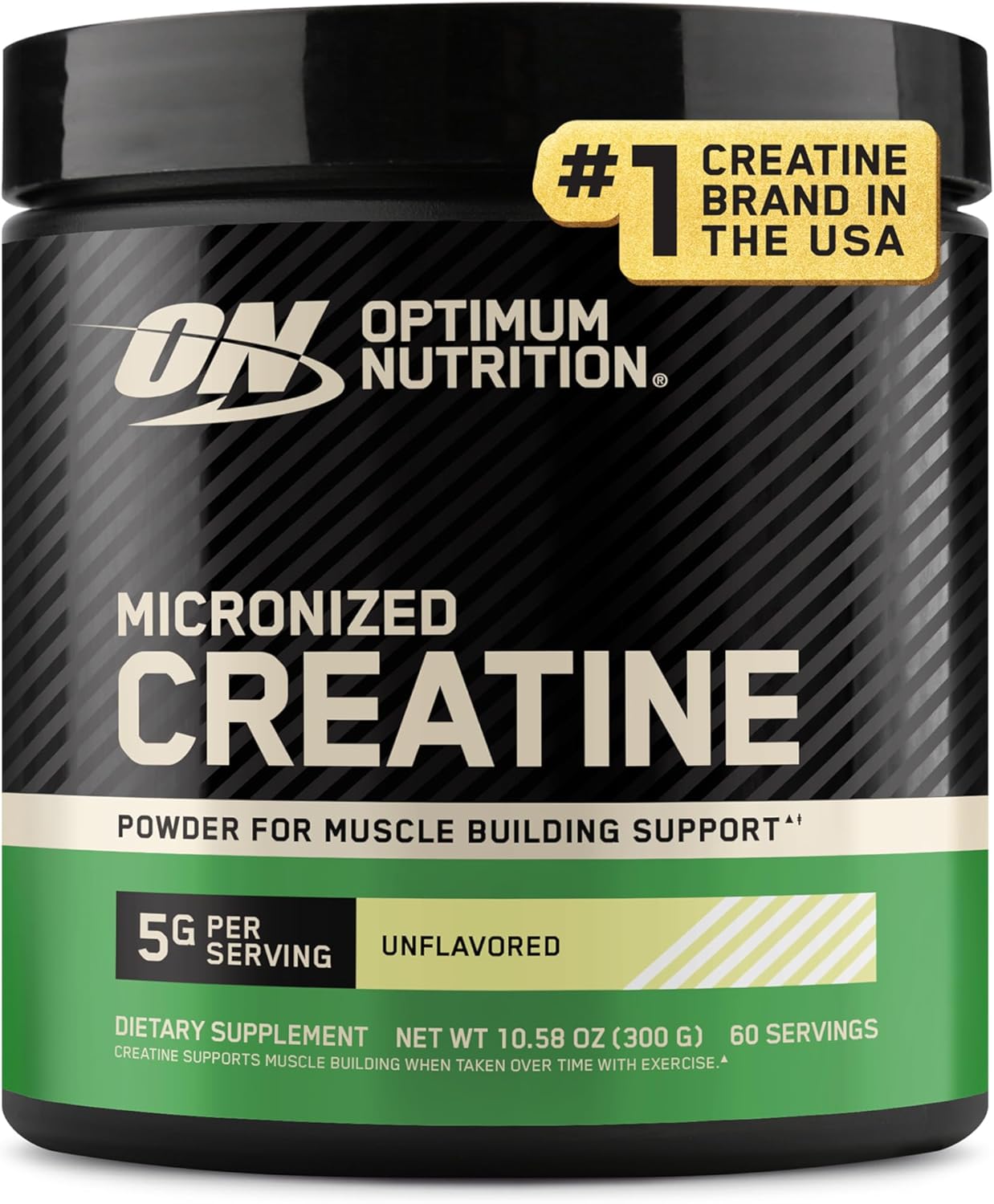
Optimum Nutrition Micronized Creatine Monohydrate Powder
With over 100k reviews on Amazon, this is a solid option for anyone looking to get started with creatine supplements. Since it’s flavorless, it also blends easily into any drinks.
Best Creatine Capsules
Capsules can suit people who dislike gritty drinks or travel often. Check the serving size carefully: reaching 3 to 5 grams may require four or more capsules, which raises the price and makes daily use less convenient.
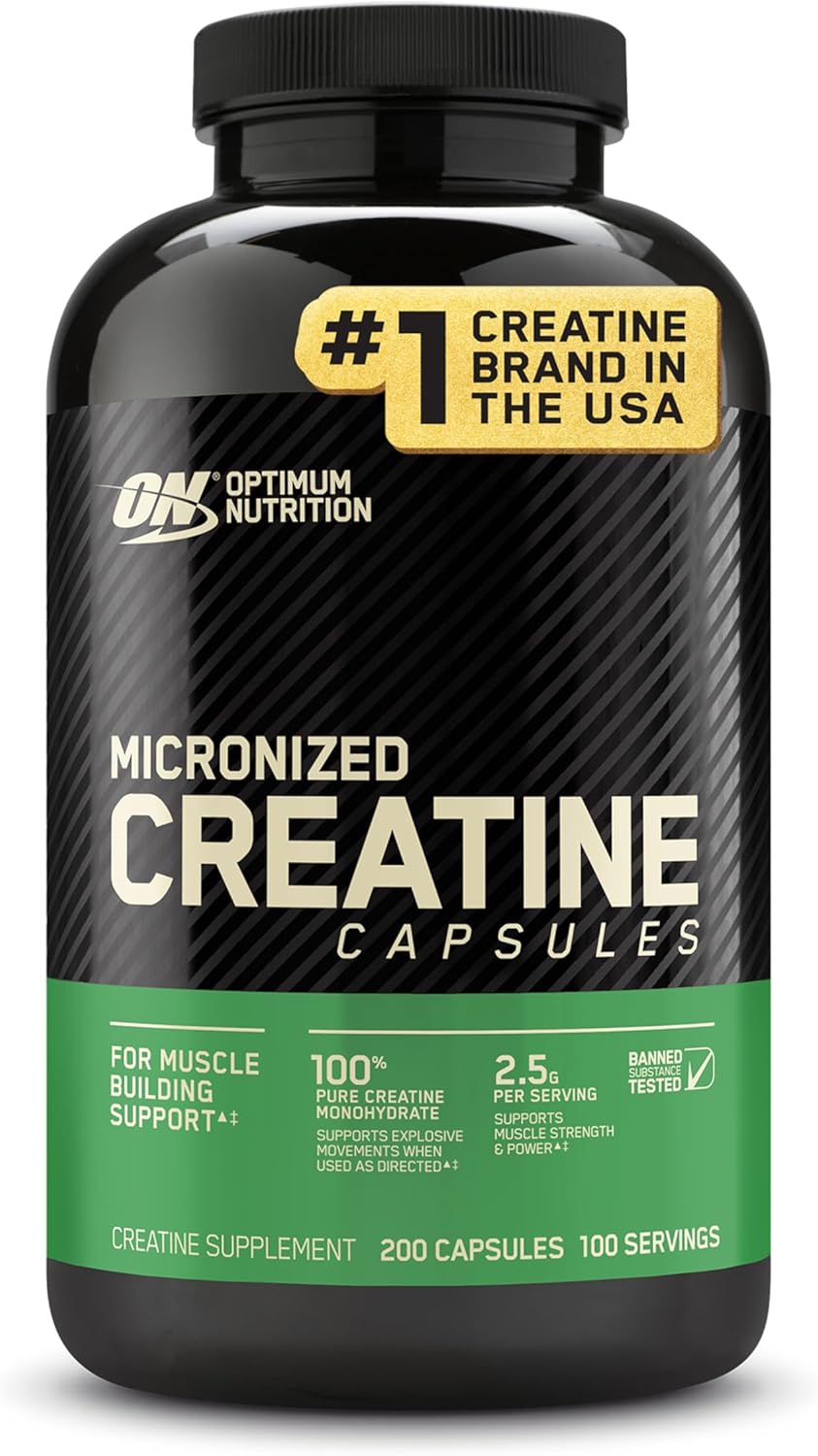
Optimum Nutrition Micronized Creatine Monohydrate Capsules
Good news – the same creatine comes in a capsule form as well! Each capsule contains 2.5 grams of creatine, so your daily dose requires 2 capsules. One bottle contains 200 capsules, lasting you for 100 days – or more than 3 months!
The Final Verdict: Does Creatine Help You Lose Weight?
Creatine does not directly make you lose weight. It does not melt fat, curb hunger, or produce a calorie deficit.
What it can do is support the type of training that helps preserve or build lean mass. When combined with resistance training, creatine may lead to a small improvement in body-fat percentage and, in some analyses, a modest extra reduction in fat mass. The effect is nowhere near large enough to treat creatine as a fat-loss supplement.
So, does creatine help with weight loss? Indirectly, it may help you achieve a better result: less fat, more retained muscle, greater strength, and better training performance. But it may also make your scale weight rise at first.
For people who resistance train, plain creatine monohydrate is a sensible addition during a fat-loss phase. For people looking for a pill or powder that makes fat disappear without changing diet or activity, it is the wrong product.