Benefiber and Metamucil are two of the best-known fiber supplements, often recommended for digestive health and regular bowel movements. Both can help increase your daily fiber intake, but choosing between them involves more than comparing the number of grams listed on their labels.
The fundamental difference lies in their active ingredients. Metamucil contains psyllium husk, a gel-forming fiber with clinical evidence supporting its use for constipation, cholesterol reduction, and blood sugar management. Benefiber contains wheat dextrin, a non-gel-forming fiber that is fermented by intestinal bacteria and primarily marketed for its prebiotic benefits.
These differences matter because soluble fibers are not interchangeable. A fiber that helps maintain bowel regularity may have very different effects on your gut than one that primarily feeds intestinal bacteria. Understanding how each behaves can help you choose a supplement based on your actual symptoms and health goals.
Quick tip:
Check our Amazon storefront to see our nutritionist-approved ideas for fiber-maxxing.
Benefiber vs. Metamucil: A Side-by-Side Comparison
Although both products supply soluble fiber, their physical properties, gastrointestinal effects, and clinical applications differ considerably.
| Feature | Benefiber Original | Metamucil |
|---|---|---|
| Main ingredient | Wheat dextrin | Psyllium husk |
| Fiber type | Soluble, non-viscous | Soluble, viscous |
| Forms a gel in water | No | Yes |
| Fermented by gut bacteria | Yes | Limited fermentation |
| Evidence for constipation | Limited | Supported by clinical trials |
| Evidence for LDL cholesterol | Insufficient | Stronger |
| Evidence for blood sugar | Insufficient | Supported by clinical studies |
| Prebiotic activity | Yes | Some potential, but not its main mechanism |
| Effect on beverage texture | Dissolves without noticeable thickening | Thickens as it absorbs water |
| Gluten-free | Original powder is labeled gluten-free | Psyllium-based formulas are generally gluten-free; check label |
| Most useful for | Convenient fiber supplementation and prebiotic activity | Constipation, stool consistency, and certain metabolic goals |
The comparison above focuses on Benefiber Original Powder and conventional psyllium-based Metamucil products sold in the United States. Both brands offer multiple formulations, so nutritional information, added ingredients, and serving sizes vary.
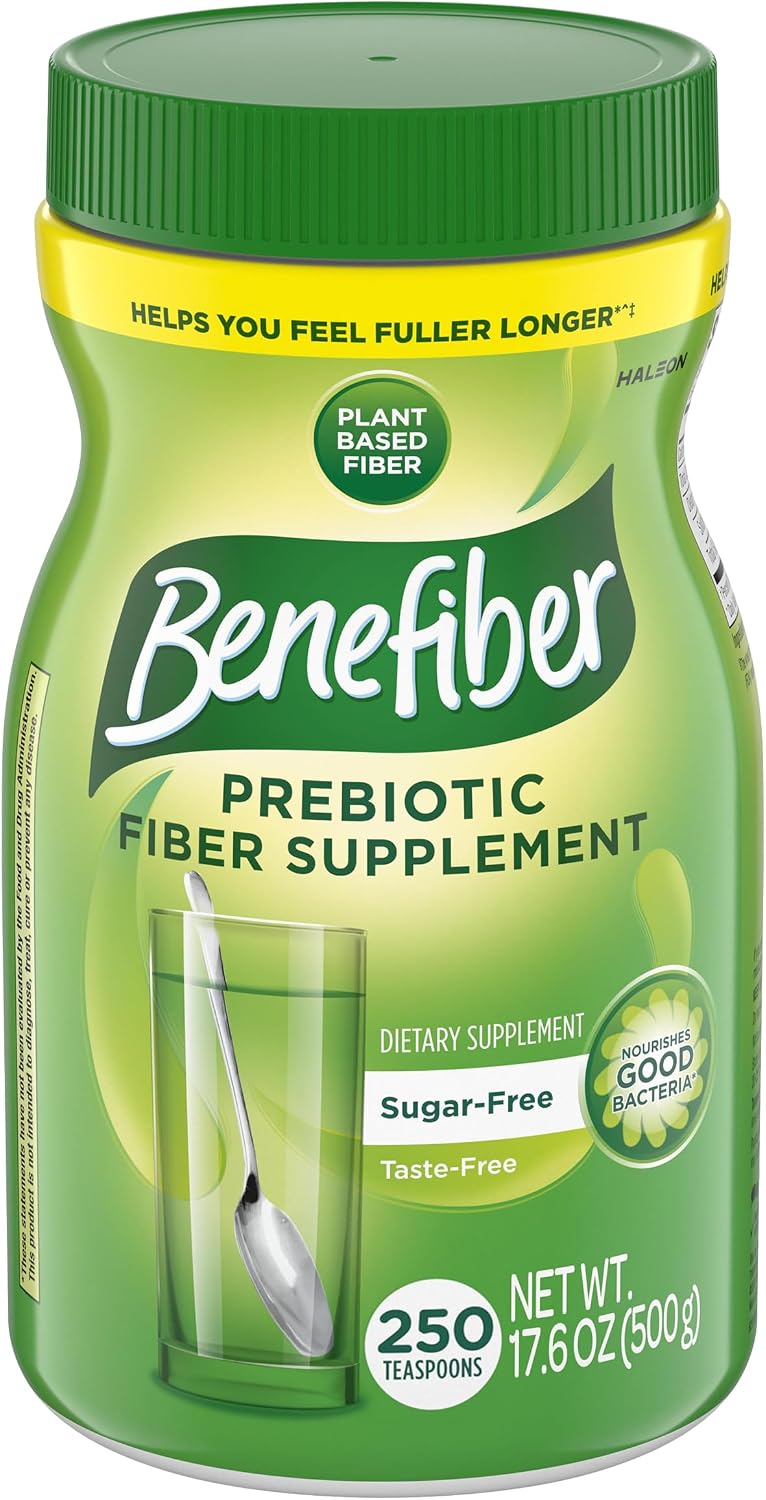
Benefiber Prebiotic Fiber Supplement Powder
Benefiber is especially wellknown for its prebiotic effect, feeding your good bacteria and improving overall microbiome balance. It may also support weight loss as it increases the feeling of fullness. It doesn’t work quite the same way as Metamucil, but its own health benefits are undoubtedly strong.
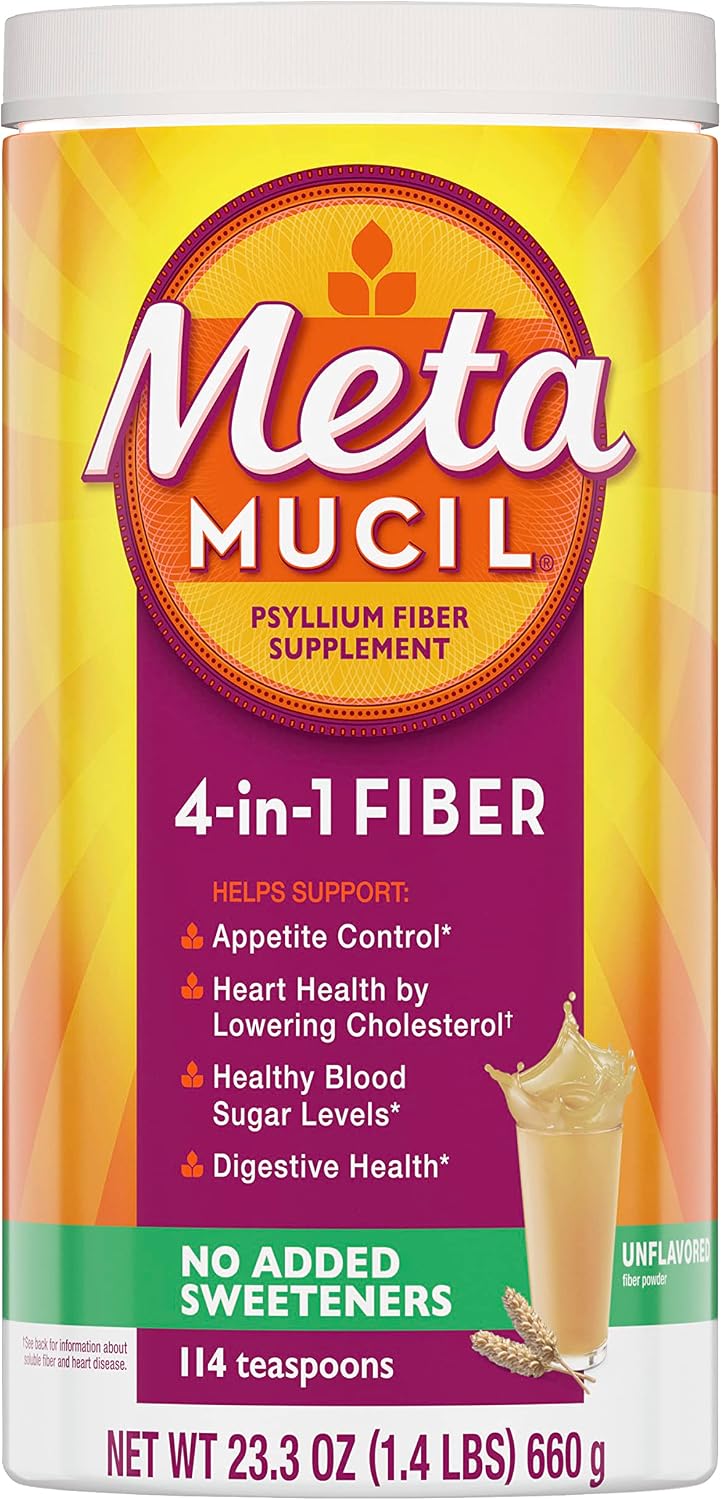
Metamucil, Daily Psyllium Husk Powder Supplement
Metamucil’s renowned benefits come mostly from psyllium, which is widely recognized for its great health impact, especially for digestion. The soluble fiber in Metamucil can help keep you going regularly and thus, may also make you feel lighter overall.
Why Do Benefiber and Metamucil Work Differently?
The terms soluble fiber and insoluble fiber are useful, but they do not fully explain fiber’s effects on the digestive system. Two additional characteristics are particularly important: viscosity and fermentability.
Viscosity describes a fiber’s ability to thicken or form a gel when mixed with water. Fermentability describes how readily intestinal bacteria break down that fiber.
Psyllium husk is a viscous, gel-forming fiber. It absorbs water and retains much of its gel structure as it passes through the digestive tract. This physical action contributes to its stool-normalizing properties and helps explain its effects on cholesterol absorption and carbohydrate digestion.
Wheat dextrin behaves differently. Although soluble in water, it does not form the same thick gel. Instead, gut bacteria ferment much of it in the large intestine, producing metabolites known as short-chain fatty acids (SCFAs). These compounds are involved in intestinal metabolism and gut health, but their production does not mean that wheat dextrin will improve constipation or other symptoms.
This distinction explains an important misconception: two supplements can contain the same amount of soluble fiber without providing the same physiological benefits. The comparison is supported by research into the physical properties of dietary fibers, including a scientific review of fiber supplements and an analysis published by Tufts Health & Nutrition Letter.
Benefiber Ingredients: What Is Wheat Dextrin?
The only ingredient in Benefiber Original Powder is wheat dextrin, a soluble dietary fiber manufactured from wheat starch.
During processing, wheat starch is broken down and modified into carbohydrate chains that resist complete digestion in the small intestine. The resulting fiber travels into the large intestine, where intestinal microorganisms can ferment it.
According to Benefiber’s official product information, its original powder is sugar-free, taste-free, and designed to dissolve into liquids and soft foods without substantially altering their consistency.
Does Benefiber Contain Gluten?
Although wheat dextrin originates from wheat, Benefiber Original is labeled gluten-free because its processing allows it to meet the FDA’s gluten-free labeling requirements. In the United States, qualifying foods must contain less than 20 parts per million of gluten.
However, gluten-free does not necessarily mean wheat-allergen-free. Anyone with a diagnosed wheat allergy should avoid assuming that wheat-derived ingredients are safe and discuss the product with their allergist. People with celiac disease should verify the exact formulation and gluten-free labeling.
Benefiber gummies, flavored powders, and other products may have additional ingredients, so the single-ingredient description applies specifically to Benefiber Original Powder.
Metamucil Ingredients: What Is Psyllium Husk?
The primary active ingredient in conventional Metamucil fiber products is psyllium husk, derived from the outer covering of seeds from the Plantago ovata plant. Psyllium has a particularly high water-holding capacity. Once hydrated, it expands into a viscous gel that helps retain moisture in the stool.
Unlike Benefiber Original, many flavored Metamucil powders contain ingredients besides their primary fiber source. Depending on the formulation, these may include sugar, sweeteners, flavorings, citric acid, and coloring agents. For example, real-sugar orange formulations contain sucrose, while some sugar-free formulations contain aspartame. Metamucil also offers versions sweetened with stevia.
The ingredient list matters for people monitoring added sugar, avoiding particular sweeteners, or managing phenylketonuria (PKU). Some aspartame-containing Metamucil products specifically warn that they contain phenylalanine.
Metamucil’s physiological benefits come primarily from psyllium, not its flavorings or sweeteners. Sure, sweetened versions may taste better, but we recommend steering clear of products containing additives. Stick to formulas with primarily psyllium husk to make sure you reap all the health benefits without any added risks from additives.
Benefiber vs. Metamucil for Constipation: Which Is More Effective?
For constipation, Metamucil has the clearer clinical advantage. Psyllium’s gel-forming properties allow it to increase stool water content and improve stool consistency. Rather than stimulating intestinal contractions, it works mainly through the physical effects of hydrated fiber.
The evidence extends beyond theoretical mechanisms.The 2023 American Gastroenterological Association and American College of Gastroenterology guidelines recommend considering fiber supplementation for adults with chronic idiopathic constipation, especially when dietary fiber intake is low.
Among the fiber types evaluated, psyllium had the clearest evidence of effectiveness. The guideline’s analysis found that psyllium increased spontaneous bowel movements by an estimated 2.32 per week compared with the control groups. However, the certainty of this evidence was rated low, partly because the available trials were relatively small or had methodological limitations.
This is encouraging evidence, but not a guarantee that everyone taking Metamucil will experience two additional bowel movements each week.
Can Benefiber Help With Constipation?
Benefiber may support digestive health as part of an otherwise balanced, fiber-rich diet, but wheat dextrin has considerably less convincing evidence as a treatment for established constipation.
Its lack of gel formation means it cannot be expected to soften stool through the same water-retention mechanism as psyllium. Much of its activity instead comes from microbial fermentation.
Research has also raised the possibility that some non-viscous fibers, including wheat dextrin, may be unhelpful or even aggravate constipation in certain circumstances. The evidence is not sufficient to conclude that Benefiber causes constipation in everyone, but it is a reason to avoid treating all soluble fibers as equally effective laxatives.
Someone struggling with hard, difficult-to-pass stools has a stronger scientific basis for choosing psyllium than wheat dextrin. Someone simply trying to increase dietary fiber without existing constipation may find Benefiber perfectly suitable.
Is Metamucil a Laxative?
Metamucil’s psyllium-based constipation products are classified as bulk-forming fiber laxatives. Unlike stimulant laxatives, which act on intestinal motility, bulk-forming laxatives absorb water and increase the volume and hydration of intestinal contents. This can make stool easier to pass.
According to the official Metamucil Drug Facts labeling, products indicated for occasional constipation generally produce a bowel movement within 12–72 hours.
That time frame is important. Metamucil is not an immediate treatment for severe constipation, and taking additional doses does not necessarily make it work faster. Its action also differs from stimulant laxatives such as senna or bisacodyl, and from osmotic laxatives such as polyethylene glycol (PEG).
In fact, the AGA–ACG guidelines make a stronger recommendation for PEG than for fiber supplementation in chronic idiopathic constipation. Therefore, psyllium is a reasonable option for many people with mild constipation, but it is not always the most effective treatment for more persistent cases.
Benefiber vs. Metamucil for Cholesterol
Metamucil is the more evidence-supported option for lowering LDL cholesterol. Viscous soluble fibers such as psyllium interfere with the intestinal reabsorption of bile acids. Because the body uses cholesterol to produce new bile acids, this process can contribute to reductions in circulating LDL cholesterol over time.
A 2018 systematic review and meta-analysis published in The American Journal of Clinical Nutrition included 28 randomized controlled trials involving 1,924 participants. Researchers found that psyllium supplementation, at a median dose of approximately 10.2 grams of psyllium daily, reduced LDL cholesterol by an average of 0.33 mmol/L compared with control treatments. The analysis also reported improvements in non-HDL cholesterol and apolipoprotein B, an important marker associated with atherogenic lipoproteins.
These results indicate a meaningful but moderate effect. Psyllium can complement a cholesterol-lowering diet, but it does not replace prescribed medication when medication is necessary.
Wheat dextrin does not have comparable clinical evidence for reducing LDL cholesterol. Its non-viscous structure provides a plausible explanation for this difference.
Another detail worth considering is dosage. The FDA-authorized health claim concerning psyllium and heart disease refers to diets providing at least 7 grams of soluble fiber from psyllium husk daily, within a diet low in saturated fat and cholesterol.
Can Benefiber or Metamucil Help You Lose Weight?
Both products are marketed in ways that connect fiber intake with fullness and appetite management, but neither should be considered a weight-loss supplement.
Psyllium has a plausible mechanism for increasing satiety. Its gel-forming properties can affect the physical characteristics of gastrointestinal contents, and some clinical studies have observed improvements in fullness or appetite-related outcomes.
Wheat dextrin has also been investigated for satiety, although its effects are not driven by the same gel-forming mechanism. The important distinction is between feeling fuller after taking a supplement and achieving sustained fat loss.
Evidence for appetite-related changes does not necessarily establish long-term weight reduction. Studies vary in dose, duration, participant characteristics, and whether reductions in body weight were actually measured. For example, a person who feels less hungry after taking psyllium may find it easier to manage food intake. However, weight loss would still depend on overall energy balance rather than the supplement independently burning fat.
Benefiber is similarly unlikely to produce meaningful weight loss simply because it increases dietary fiber. For weight management, choosing between the two products should therefore be secondary to overall dietary quality, adequate protein intake, sustainable eating habits, and sufficient fiber-rich foods. Remember: there’s no magic supplement for weight loss.
How Much Benefiber or Metamucil Should You Take?
One easily overlooked issue in the Benefiber vs. Metamucil comparison is that serving sizes are not standardized across the brands. For example, current US manufacturer information provides the following comparisons:
| Product | Example amount | Dietary fiber |
|---|---|---|
| Benefiber Original Powder | 4 teaspoons | 6 g |
| Metamucil Sugar-Free Orange Powder | 2 rounded teaspoons | 6 g |
| Metamucil Psyllium Fiber Capsules | 5 capsules | 2 g |
Metamucil’s sugar-free orange powder provides approximately 5 grams of soluble fiber in a two-rounded-teaspoon portion. Benefiber Original provides 6 grams of soluble fiber in a four-teaspoon portion.
The figures may look similar, but the active fibers produce different physiological effects. A further complication is that the total weight of a supplement serving is not necessarily the same as its dietary fiber content or its active psyllium content. Added sugar, flavoring agents, and other ingredients can make products difficult to compare by weight alone.
For this reason, compare the amount and type of fiber delivered per serving rather than relying on container size, teaspoons, or marketing claims.
How to Choose the Right Fiber Supplement for Your Needs
The most sensible choice depends on what you want the supplement to accomplish. Here’s a quick breakdown to understand which option might work better for you: Benefiber vs Metamucil.
| Your main goal | Possibly better-suited choice | Why |
|---|---|---|
| Relieving occasional constipation | Metamucil | Psyllium forms a water-retaining gel |
| Improving hard stool consistency | Metamucil | Stronger clinical evidence for stool normalization |
| Improving IBS symptoms | Metamucil may be preferable | Psyllium has specific clinical evidence |
| Supporting LDL cholesterol reduction | Metamucil | Benefits demonstrated in randomized trials |
| Supporting blood sugar management | Metamucil | Evidence for effects on glucose and HbA1c |
| Adding prebiotic fiber to the diet | Benefiber | Wheat dextrin is fermentable |
| Mixing fiber into coffee, yogurt, or meals | Benefiber | Dissolves without substantial thickening |
| Avoiding all wheat-derived ingredients | Psyllium-based Metamucil may be preferable | Benefiber Original comes from wheat |
| Avoiding added sugar or sweeteners | Depends on formulation | Compare exact ingredient labels |
| Weight loss | Neither has a clear advantage | Evidence does not justify using either as a primary weight-loss strategy |
Someone with no digestive symptoms who struggles to reach their daily fiber target may reasonably prefer Benefiber because it fits easily into meals. Someone dealing with constipation or elevated LDL cholesterol has stronger reasons to choose a psyllium-based product.
Benefiber Prebiotic Fiber Supplement Powder
Benefiber is especially wellknown for its prebiotic effect, feeding your good bacteria and improving overall microbiome balance. It may also support weight loss as it increases the feeling of fullness. It doesn’t work quite the same way as Metamucil, but its own health benefits are undoubtedly strong.
Metamucil, Daily Psyllium Husk Powder Supplement
Metamucil’s renowned benefits come mostly from psyllium, which is widely recognized for its great health impact, especially for digestion. The soluble fiber in Metamucil can help keep you going regularly and thus, may also make you feel lighter overall.
The Verdict: Is Benefiber or Metamucil Better?
Metamucil is the more evidence-supported choice for people seeking measurable improvements in constipation, stool consistency, LDL cholesterol, or blood sugar management. Its main advantage is not that it contains more fiber but that psyllium’s gel-forming properties have been investigated in clinical trials with relevant health outcomes.
Benefiber serves a different purpose. Its wheat dextrin is easy to incorporate into foods and drinks, making it a convenient way to increase soluble fiber intake. It also has documented prebiotic activity, although claims about improved gut health should be interpreted cautiously because measurable microbiome changes do not always translate into better symptoms.
Neither supplement is inherently superior for every person. Digestive tolerance, current fiber intake, specific symptoms, medical conditions, and individual preferences all influence which option makes sense.
The most useful question is not simply which supplement contains more fiber. It is which type of fiber has evidence for the particular benefit you want and whether that benefit matters more to you than convenience and tolerance.